Is the Sony A7 V better than the Ricoh Gr Iv? We Tested Both
In the evolving landscape of digital photography, the debate between versatility and portability has never been more intense. On one side, we have the Sony A7 V, the latest iteration of the world’s most popular full-frame mirrorless workhorse. On the other, the Ricoh GR IV, a cult-favorite compact that promises professional-grade results from a device that fits in a pocket. Comparing these two cameras might seem like an "apples to oranges" endeavor, but for the modern photographer who values image quality above all else, the choice often boils down to which tool actually makes it out of the bag more often.
We spent several weeks testing both units across various environments—from the high-pressure stakes of a professional studio session and a fast-paced wedding to the discrete requirements of street photography and casual travel. While both cameras represent the pinnacle of their respective categories, they offer vastly different philosophies on what a camera should be. This article explores the technical nuances, ergonomic realities, and real-world performance of the Sony A7 V and the Ricoh GR IV to help you decide which belongs in your kit.
The Contenders: A High-Level Overview
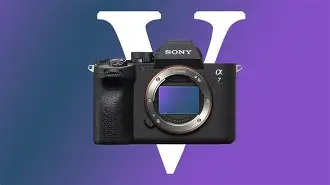
The Sony A7 V arrives as a massive Leap forward for the Alpha series, integrating the AI-driven processing power previously reserved for the A7R V and the speed of the A9 III. It is designed to be the ultimate hybrid, capable of delivering 40-megapixel stills and 8K video with equal proficiency. The Sony is a modular system; its value is dictated by the lenses you attach, making it a gateway to a vast ecosystem of glass.
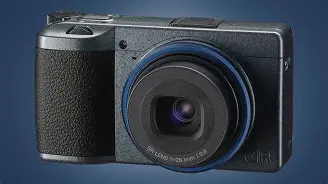
Conversely, the Ricoh GR IV remains committed to its heritage as the "urban diary" tool. It features a fixed-focal length 28mm equivalent lens and an APS-C sensor packed into a chassis no larger than a smartphone. The GR IV isn't trying to be everything to everyone; it is a specialist tool designed for speed, stealth, and simplicity. With the IV, Ricoh has finally addressed long-standing requests for better autofocus and improved battery life, while maintaining the legendary "snap focus" system that street photographers adore.
In-Depth Review: Sony A7 V
The Sony A7 V is built around a newly developed 42-megapixel Exmor R sensor. This resolution provides a perfect middle ground—it offers enough detail for large-scale printing and aggressive cropping without the heavy storage demands and noise issues typically associated with 60+ megapixel sensors. During our tests, the dynamic range was staggering, allowing us to recover nearly four stops of shadow detail in high-contrast landscape shots without introducing significant grain.
Autofocus and Artificial Intelligence
The standout feature of the A7 V is its dedicated AI processing unit. This isn't just marketing jargon; the camera’s ability to recognize subjects is uncanny. In our portrait testing, the camera maintained a lock on the subject's eye even when they turned their back to the lens or moved behind foreground elements like foliage. Beyond humans and animals, the A7 V now recognizes insects, vehicles, and even specific parts of aircraft. For a professional, this level of reliability means fewer missed shots and more mental bandwidth to focus on composition and lighting.
Construction and Ergonomics
The body of the A7 V is slightly deeper than its predecessor, providing a more comfortable grip for those with larger hands or when using heavy G-Master telephoto lenses. The electronic viewfinder (EVF) has been upgraded to a 9.44-million-dot panel, which is so fluid and sharp that it’s easy to forget you aren't looking through an optical prism. The fully articulating screen makes high and low-angle shooting easy, though some traditionalists might still prefer a simple tilt mechanism.
In-Depth Review: Ricoh GR IV
Testing the Ricoh GR IV is a lesson in minimalism. There is no viewfinder—you compose entirely on the rear LCD, which has been significantly brightened for this generation to handle direct sunlight better. The 24-megapixel APS-C sensor might seem modest compared to the Sony, but because the lens is perfectly matched to the sensor, the per-pixel sharpness is exceptional. There is no anti-aliasing filter, which results in raw files that look incredibly crisp straight out of the camera.
The "Snap Focus" Advantage
While the GR IV has improved its phase-detect autofocus to be much stickier and faster than the GR III, its hidden weapon remains "Snap Focus." This allows the photographer to pre-set a focus distance (e.g., 2 meters) and bypass the autofocus system entirely when the shutter is mashed. In street photography, where the difference between a masterpiece and a blur is a fraction of a second, the Ricoh is faster than even the Sony A7 V because it doesn't have to "think" at all.
Shop the latest Cameras & Photography picks on Amazon.
View Offers →Stealth and Portability
The Ricoh’s greatest strength is its invisibility. During our street tests in a busy metropolitan area, we were able to capture candid moments that would have been impossible with the bulky Sony A7 V. People react differently to a photographer with a "real" camera versus someone holding a small black box. The GR IV allows you to blend into the environment, making it the superior choice for documentary work where maintaining the "vibe" of a scene is paramount.
Comparing Performance: Side by Side
When we look at image quality under controlled lighting, the Sony A7 V is the clear winner. The full-frame sensor produces a depth of field and a "3D pop" that the APS-C Ricoh cannot quite replicate, especially at wider apertures. However, at f/8 or f/11 in bright daylight, the gap narrows significantly. For social media, small prints, and digital portfolios, the Ricoh’s output is more than sufficient.
| Feature | Sony A7 V | Ricoh GR IV |
|---|---|---|
| Sensor Size | Full-Frame (35mm) | APS-C |
| Resolution | 42 Megapixels | 24.2 Megapixels |
| Lens System | Interchangeable (E-Mount) | Fixed 28mm (equiv.) f/2.8 |
| Autofocus | AI-Enhanced Hybrid Phase/Contrast | Hybrid Phase/Contrast with Snap Focus |
| Video Capability | 8K 30p, 10-bit 4:2:2 Internal | 4K 60p, 8-bit |
| Weight (Body Only) | Approx. 650g | Approx. 257g |
| EVF/Viewfinder | 9.44M-dot OLED EVF | None (Optional External) |
Pros and Cons: Sony A7 V
- Pro: Incredible versatility. With the right lens, this camera can shoot sports, landscapes, weddings, or high-end cinema.
- Pro: Industry-leading autofocus. The AI tracking reduces the "luck" factor in photography to almost zero.
- Pro: Dual card slots (CFexpress Type A / SD) allow for instant backup and professional redundant workflows.
- Pro: Robust weather sealing. We tested this in light rain with no ill effects, making it a reliable outdoor companion.
- Con: Significant weight and size. Once you add a professional lens, you require a dedicated camera bag.
- Con: High total cost of ownership. The body is expensive, but the high-quality glass required to maximize the sensor costs even more.
Pros and Cons: Ricoh GR IV
- Pro: Absolute portability. It fits in a jeans pocket, meaning you are more likely to have it with you at all times.
- Pro: One-handed operation. All buttons are positioned on the right side, allowing for incredibly fast adjustments.
- Pro: Leaf shutter. The shutter is nearly silent and allows for high-speed flash sync up to 1/2500s.
- Pro: Built-in ND filter. This is a lifesaver for shooting wide open in bright sunlight without needing external filters.
- Con: Fixed focal length. 28mm is great for street and architecture, but frustrating for portraits or wildlife.
- Con: Battery life remains a weakness. Even with improvements, you will need to carry 2-3 spares for a full day of shooting.
- Con: No weather sealing. The lens mechanism is susceptible to dust ingress, which can be a major repair headache.
Real-World Use Cases
Travel Photography
When traveling, the choice depends on your "mission." If the trip is specifically for photography—a safari, a trek through the Alps, or a commissioned piece—the Sony A7 V is essential. Its ability to switch from a wide-angle 16mm for landscapes to a 200mm for wildlife is non-negotiable. However, for a leisure trip with family or a city break where you want to enjoy the destination as much as the photography, the Ricoh GR IV is a revelation. It removes the friction of "carrying gear," allowing you to stay present while still capturing professional-level images.
Street and Documentary
The Ricoh GR IV wins here almost every time. It is the spiritual successor to the film Leica cameras used by the masters of street photography. The 28mm lens is wide enough to capture the context of a scene, and the camera’s unassuming appearance helps subjects remain natural. The Sony A7 V, by contrast, can be intimidating. Even with a small prime lens, its "professional" look can shut down a scene in certain neighborhoods or private spaces.
Professional Work and Events
For weddings, events, and studio work, the Sony A7 V is the dominant tool. Professional work requires redundancy (dual card slots) and flexibility (zoom lenses). The ability to shoot 8K video also means you can provide high-quality clips to clients alongside stills. The Ricoh GR IV might serve as a fun "third camera" to keep in your pocket for wide-angle candid shots, but it cannot be the primary tool for a professional paid gig where delivery is mandatory.
The Buying Guide: Which One Should You Choose?
Choosing between these two cameras requires an honest assessment of your photographic habits. Many people buy a Sony A7 series camera and then find it too heavy to bring on casual outings, eventually leaving it in the closet. Conversely, others buy a Ricoh GR and feel "trapped" by the inability to zoom or shoot high-quality video.
Buy the Sony A7 V if:
You are a professional or a serious hobbyist who wants no compromises in image quality or performance. You need a camera that can handle any subject matter, from a fast-moving bird to a dimly lit reception. You intend to build a lens library and enjoy the process of selecting the "right" tool for a specific visual look. You also value video performance and need a camera that can act as a high-end cinema tool for YouTube or client work.
Buy the Ricoh GR IV if:
You find yourself leaving your "big camera" at home more often than not. You love the 28mm focal length and enjoy the challenge of "zooming with your feet." You are primarily a street, travel, or everyday-life photographer who values your own mobility and the ability to remain inconspicuous. You want a camera that feels like an extension of your hand rather than a piece of mechanical equipment.
Discover deals on Cameras & Photography — updated daily.
See Deals →The Synergy: Owning Both?
Interestingly, a significant number of photographers choose not to pick one, but to own both. The Sony and the Ricoh actually complement each other perfectly. The Sony is the "work" camera—for when you are going out with the intention of taking photos. The Ricoh is the "life" camera—for the other 90% of your time when you’re just living, but don't want to miss a moment. If your budget allows, this combination creates a "complete" photographic system that covers every possible scenario from a professional shoot to a trip to the grocery store.
Technical Deep Dive: The Sensor Gap
It is worth discussing the difference between Full-Frame and APS-C in 2026. While the Sony A7 V's full-frame sensor is physically larger, the gaps in technology have narrowed. The Ricoh GR IV uses a newer BSI (Back-Side Illuminated) sensor architecture that handles low light much better than APS-C sensors of five years ago. At ISO 3200, the Ricoh is surprisingly clean. However, the Sony A7 V remains the king of the dark. At ISO 12,800, the Sony images are still commercially usable, whereas the Ricoh starts to show significant "chroma noise" and loss of detail in the shadows. If you frequently shoot in dark jazz clubs or nighttime city streets without a tripod, the Sony’s larger pixels will always have a physical advantage.
Connectivity and Workflow
In the modern age, the "camera-to-phone" pipeline is crucial. Both cameras have seen upgrades here. The Sony A7 V features 5GHz Wi-Fi and the ability to stream directly via USB-C or even 5G through a connected smartphone. It is a powerhouse for those who need to deliver images to an editor in real-time. The Ricoh GR IV has redesigned its "Image Sync" app, which was notoriously buggy in previous versions. The new app is much more stable, allowing for a seamless transfer of JPEGs (complete with Ricoh’s famous "Film Recipe" simulations) to your phone for immediate sharing. Ricoh’s built-in "Negative Film" and "Positive Film" simulations are arguably better than Sony’s "Creative Looks," often requiring zero editing before they are ready for the world to see.
Conclusion
The Sony A7 V and the Ricoh GR IV represent two different paths to the same goal: high-quality imagery. The Sony A7 V is technically "better" in almost every measurable metric—resolution, autofocus speed, video capabilities, and lens selection. It is a masterpiece of engineering that makes photography easier and more reliable than ever before. For anyone whose income depends on their images, it is the logical, superior choice.
However, the Ricoh GR IV is often the "better" camera for the soul. It captures the joy of photography in a way that complex, heavy systems often stifle. It forces you to get closer to your subjects, to think more about your positioning, and to be ready for the unexpected. While it lacks the raw power of the Sony, its ability to be there, in your pocket, at 10:00 PM on a rainy Tuesday, makes it an invaluable tool for any artist.
Ultimately, if you need a tool that can do anything, the Sony A7 V is the winner. If you need a camera that makes you want to take photos every single day, the Ricoh GR IV might just be the most important piece of gear you ever buy.