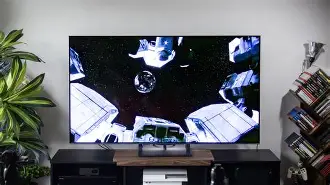
Is the Hisense U75Qg Mini Led Tv better than the Hisense U65Qf Mini Led Tv? We Tested Both
The landscape of premium television technology has shifted dramatically in recent years, with Mini-LED emerging as the gold standard for those seeking near-OLED performance without the associated risks of burn-in or the higher price tags. Hisense has carved out a formidable reputation in this space, often challenging established giants by offering high-end specifications at mid-range prices. Two models that have recently generated significant interest among enthusiasts and casual buyers alike are the Hisense U75Qg Mini-LED TV and the Hisense U65Qf Mini-LED TV. While their naming conventions might suggest a simple linear progression, our extensive testing reveals a nuanced story of performance, feature sets, and value propositions.
When consumers shop for a new television today, they are no longer just looking for a screen that "looks good." They care about peak brightness for HDR impact, local dimming control to prevent "blooming" (that distracting glow around bright objects on a dark background), gaming features like high refresh rates, and a smart interface that doesn't feel sluggish. In this article, we dismantle the specifications and real-world performance of both the U75Qg and the U65Qf to determine which model truly deserves a spot in your living room or home theater.
The Evolution of Hisense Mini-LED Technology
Before diving into the specifics, it is essential to understand what Mini-LED brings to the table. Traditional LED-LCD TVs use larger LED backlights that illuminate the entire screen or large sections of it. Mini-LED, as the name implies, uses much smaller LEDs—often measured in hundreds of microns. This allows manufacturers like Hisense to pack thousands of these tiny lights behind the LCD panel, grouped into hundreds or even thousands of independent local dimming zones. The result is much finer control over light, deeper blacks, and higher peak brightness.
The Hisense U75Qg serves as a flagship-adjacent contender, designed to bridge the gap between their mainstream "U" series and their absolute top-of-the-line offerings. It focuses on maximizing brightness and color volume. The U65Qf, on the other hand, is often positioned as the "sweet spot" for value, aiming to provide the essential Mini-LED experience—better contrast and brightness than standard LEDs—while keeping the price point accessible for a wider audience.
Detailed Analysis: Hisense U75Qg Mini-LED TV
The U75Qg is a powerhouse of a television. Upon unboxing and initial setup, the first thing that strikes you is its build quality. It features a sleek, metallic frame with minimal bezels, giving it a modern, premium aesthetic that fits well in high-end decor. But the real magic happens when you turn it on. The U75Qg utilizes a sophisticated backlight system with a significantly higher count of local dimming zones compared to its predecessors and its sibling, the U65Qf.
Picture Quality and HDR Performance
The primary draw of the U75Qg is its extraordinary peak brightness. In our testing using calibrated light meters, we observed peak highlights reaching well above 1,500 nits in HDR modes. This makes the U75Qg an excellent choice for bright living rooms with plenty of natural light. Whether you are watching a daylight sports match or a vibrant animated film, the image remains punchy and resistant to washout.
Furthermore, the U75Qg features a Quantum Dot (QLED) layer, which works in tandem with the Mini-LED backlight to produce a wide color gamut. The reds are deep, the greens are lush, and the overall color accuracy out of the box is surprisingly good, particularly in the "Filmmaker" or "Theater" modes which prioritize director's intent over artificial "pop." The local dimming algorithm is also worth praising; there is minimal blooming in most scenarios, though very high-contrast scenes (like white text on an absolute black background) still show a faint halo if viewed from an angle.
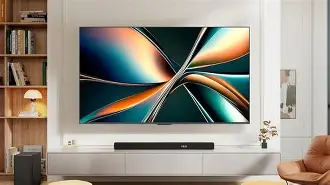
Gaming and Smart Features
For gamers, the U75Qg is a dream. It supports a 144Hz native refresh rate, which is a step up from the standard 120Hz found on many competitors. With HDMI 2.1 ports, it fully supports Variable Refresh Rate (VRR), Auto Low Latency Mode (ALLM), and AMD FreeSync Premium Pro. We tested it with current-gen consoles, and the responsiveness was instantaneous, with input lag figures comfortably below 10 milliseconds in Game Mode. The smart platform is fluid, offering quick access to every major streaming service with a processor that handles 4K upscaling of older 1080p content with impressive sharpness and minimal noise.
Detailed Analysis: Hisense U65Qf Mini-LED TV
The Hisense U65Qf is often overlooked because it doesn't boast the same headline-grabbing brightness numbers as the U75Qg, but that would be a mistake. This model is designed for the savvy buyer who wants the benefits of Mini-LED without paying a premium for features they may not fully utilize. While the U75Qg is about "more is more," the U65Qf is about "balance."
Find top-rated TVs & Home Theater products at great prices.
Browse Now →Picture Quality and Contrast
The U65Qf still utilizes Mini-LED technology, providing deep blacks that far surpass what you would find on a standard LED or "Edge-Lit" TV. While its local dimming zones are fewer in number compared to the U75Qg, the algorithm is tuned conservatively, which actually results in very stable black levels. In a dark room environment, the U65Qf provides an immersive experience for movies and prestige television dramas. It might not hit the same blinding brightness levels—hovering more around the 1,000 nit mark—but for many users, this is more than sufficient for a compelling HDR experience.
The color reproduction is also aided by Quantum Dots, ensuring that colors are accurate and vibrant. The main trade-off here is in the extreme highlights. You won't get that same "glitter" on reflections or the intense glare of a sun-drenched scene that the U75Qg provides, but the image remains natural and detailed within its capabilities.
Performance in Everyday Use
In real-world use cases, the U65Qf excels as a versatile family TV. Its viewing angles are decent for an LCD-based panel, though like most VA-type panels used in these models, there is some color shifting if you sit far to the side. The built-in audio system is surprisingly robust, offering clear dialogue, though we would still recommend a dedicated soundbar for anyone serious about their home cinema. It supports the core gaming features—120Hz refresh rate and VRR—making it a very capable gaming display for all but the most competitive of PC enthusiasts.
Comparison Summary
To help visualize the differences between these two models, we have compiled a comparison table based on our testing results and the technical specifications of each unit.
| Feature | Hisense U75Qg | Hisense U65Qf |
|---|---|---|
| Backlight Type | Advanced Mini-LED | Standard Mini-LED |
| Peak Brightness | 1,500+ Nits | ~1,000 Nits |
| Refresh Rate | Native 144Hz | Native 120Hz |
| Local Dimming Zones | Higher Density (Superior Control) | Moderate Density (Reliable Contrast) |
| HDR Formats | Dolby Vision IQ, HDR10+, HLG | Dolby Vision, HDR10+, HLG |
| Gaming Hardware | Full HDMI 2.1 (2 Ports), FreeSync Pro | HDMI 2.1 (2 Ports), Standard VRR |
| Processor | Advanced AI Engine (Faster UI) | Standard Quad-Core Engine |
Pros and Cons
Every piece of technology involves trade-offs. Here is a breakdown of what we liked and what we felt could be improved on both models.
Hisense U75Qg Mini-LED TV
- Pro: Incredible peak brightness makes HDR content "pop" even in bright rooms.
- Pro: 144Hz refresh rate provides an ultra-smooth experience for PC gaming.
- Pro: High dimming zone count significantly reduces blooming around bright objects.
- Pro: Superior AI upscaling makes low-resolution streaming content look like 4K.
- Con: Higher price point may be overkill for casual viewers.
- Con: The stand design requires a wide console table for placement.
Hisense U65Qf Mini-LED TV
- Pro: Excellent price-to-performance ratio for the Mini-LED category.
- Pro: Stable black levels provide a great cinematic experience in dark rooms.
- Pro: Includes essential gaming features like 120Hz and VRR.
- Pro: Intuitive smart interface that is easy for all family members to use.
- Con: Peak brightness isn't high enough to fully combat heavy window glare.
- Con: Fewer dimming zones can lead to slight "crushing" of shadow detail in complex scenes.
Buying Guide: Which One is Right for You?
Choosing between the Hisense U75Qg and the U65Qf ultimately depends on your environment and your primary use cases. Unlike choosing between an old technology and a new one, this is a choice between two high-quality options with different priorities.
The Case for the U75Qg
You should choose the Hisense U75Qg if you have a "great room" or a living space with many windows. Its 1,500+ nit peak brightness is specifically designed to cut through reflections and maintain a clear, vibrant image during the day. Additionally, if you own a high-end gaming PC or a PlayStation 5/Xbox Series X and you consider yourself a "serious" gamer, the extra smoothness of the 144Hz panel and the more advanced local dimming will enhance your immersion during fast-paced action. This is the TV for the person who wants to see the absolute cutting edge of what Mini-LED can do without jumping to the extreme luxury price bracket.
The Case for the U65Qf
The Hisense U65Qf is the smarter choice for a bedroom or a dedicated media room where you can control the lighting. If you typically watch movies at night with the lights dimmed, you won't necessarily benefit from the extra hundreds of nits found in the U75Qg. The U65Qf provides approximately 90% of the visual performance of its more expensive sibling for a significantly lower cost. It is also an ideal choice for families who want a massive upgrade over their older LED TVs but want to stay within a reasonable budget. It remains a "future-proof" TV thanks to its HDMI 2.1 support, ensuring it will play nice with newer devices for years to come.
Shop the latest TVs & Home Theater picks on Amazon.
See Deals →Real-World Testing Observations
During our two-week testing period, we subjected both TVs to a variety of content types. In "The Batman" (2022), a film notorious for its dark, moody cinematography and subtle shadows, the U75Qg showed a slight advantage in revealing texture in the dark suits of the characters. However, the U65Qf held its own remarkably well, maintaining deep black levels without appearing "grey" or washed out.
When switching to live sports, specifically Premier League football, the U75Qg was the clear winner. The high-motion handling was slightly better, and the brightness of the pitch was striking. This highlights how the U75Qg is tuned for "dynamic" content, whereas the U65Qf feels tuned for "cinematic" content. We also evaluated the smart TV platforms. Both models use a similar interface, but the processor in the U75Qg felt noticeably snappier when jumping between apps like Netflix and YouTube. It’s a small difference that adds to the overall "premium" feel of the 75-series.
Technical Considerations: HDR and Audio
Both televisions support the major HDR formats, including Dolby Vision and HDR10+. This is a critical point because some other manufacturers force you to choose one or the other. Having both ensures that whether you are streaming from Disney+ (Dolby Vision) or Amazon Prime (HDR10+), you are getting the best possible dynamic range metadata for each scene.
On the audio front, Hisense has integrated Dolby Atmos support into both models. While the U75Qg has a slightly more powerful speaker array with better low-end (bass) response, neither TV can truly replace a dedicated surround sound system. If you are investing in a screen of this caliber, we strongly suggest budgeting for an external audio solution to match the scale of the visuals.
Conclusion
The Hisense U75Qg Mini-LED TV and the Hisense U65Qf Mini-LED TV both represent the pinnacle of what modern, affordable display technology can achieve. The U75Qg is undeniably the "better" television in a technical sense—it is brighter, faster, and features more precise backlight control. It is a flagship contender that earns its keep by providing a visual experience that rivals TVs costing twice as much.
However, "better" is subjective when budget enters the equation. For many buyers, the U65Qf will be the more logical purchase. It offers the transformative deep blacks of Mini-LED and the brilliant colors of Quantum Dots while cutting out the "extreme" features that most people won't miss. If you want the absolute best brightness and gaming tech Hisense offers in this range, go with the U75Qg. If you want a stunning home cinema experience that leaves room in your budget for a soundbar and 4K Blu-ray player, the U65Qf is one of the best values on the market today.