5 Hidden Features of the Wh 1000Xm4 Wireless You Must Know About
Wh 1000Xm4 Wireless headphones remain a reference in the premium noise-cancelling headphone market. Beyond the headline specs—excellent active noise cancellation (ANC), long battery life, and refined sound—this model contains several lesser-known features that materially improve everyday use. This article examines five of those hidden features, provides a detailed review and analysis, lays out pros and cons, includes a comparison table with relevant alternatives, offers a practical buying guide, and finishes with a concise conclusion. The tone throughout is editorial and informative, focused on what buyers typically care about in real-world scenarios such as commuting, remote work, travel, and conference calls.
Introduction
When buyers evaluate premium headphones, specifications like driver size, ANC ratings, and battery hours often dominate the conversation. The Wh 1000Xm4 Wireless pairs strong baseline performance with several underappreciated capabilities designed to simplify daily life. These features—some software-driven, some hardware-enabled—address real pain points: switching between devices, handling interruptions during commutes, preserving sound quality over Bluetooth, and making call handling more reliable in noisy environments.
Understanding these hidden features helps buyers determine whether the headset will meet their needs beyond headline metrics. The sections below explain what these features do, how they behave in practical situations, and why they matter for different types of users.
Detailed Product Review & Analysis
Overview of core performance
The Wh 1000Xm4 Wireless delivers a balanced sound profile with extended low-end weight and clear mids. The tuning favors a slightly warm character that suits a wide range of genres—podcasts and spoken-word content remain intelligible while contemporary pop and electronic music retain impact. Sound-stage perception is reasonable for closed-back headphones, with strong imaging for on-axis listening.
ANC performance is a standout. The system uses dual noise sensor microphones to capture ambient sound and apply adaptive processing. In urban commutes and airplane cabins, the ANC significantly reduces low-frequency hums (engine and subway rumble) and mitigates mid-frequency chatter. While no ANC is perfect, the Wh 1000Xm4 Wireless strikes a compelling balance between noise suppression and natural-sounding audio.
Battery life in real-world use is robust. Typical listeners will see over 20 hours with ANC engaged and Bluetooth playback. Fast charging provides several hours of playback after a 10-minute charge—useful when a quick top-up is needed before a flight or meeting.
Comfort, build, and portability
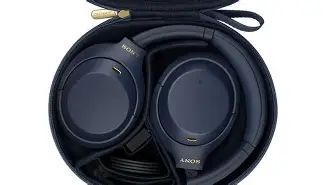
Comfort is a common buyer priority. These headphones use plush memory-foam earpads and a light headband construction that suits long listening sessions—remote workdays, long-haul flights, or marathon podcast binges. The foldable design and included carrying case make them reasonably portable, though they remain larger than true wireless earbuds.
Build quality is premium but predominantly plastic, which keeps weight down. The hinges and earpad materials are durable under normal use; however, buyers who expect heavy sweat or gym-centric durability should note that these are not IP-rated for water or dust resistance.
Connectivity and codecs
Support for SBC, AAC, and LDAC gives users options for prioritizing compatibility or higher bitrate Bluetooth streams when paired with compatible devices. LDAC enables near-high-resolution streaming over Bluetooth for compatible Android devices, improving audio fidelity when wireless convenience is required.
Multipoint pairing is a practical inclusion: the headphones can remember several devices and switch more gracefully between a phone and a laptop. This feature solves a frequent annoyance—missing a call while listening to a movie on a laptop—and is particularly useful for users who alternate between mobile and desktop workflows.
Call performance
Call quality benefits from adaptive beamforming and an integrated talk-to-chat system (one of the hidden features discussed below). The microphone array handles indoor and outdoor calls better than many competitors, though wind and very noisy environments still present challenges.
Looking for the best Audio & Headphones deals on Amazon?
See Deals →5 Hidden Features Explained
1. Speak-to-Chat: Automatic Conversation Mode
Speak-to-Chat detects when the wearer starts talking and automatically pauses playback and opens ambient mode. For commuters who need to ask a ticket agent a quick question, or for office workers who must briefly converse with a colleague, this feature removes the need to tap the headset or reach for a phone. It preserves situational awareness and minimizes interruptions to listening sessions.
Practical note: sensitivity can be tuned in the companion app. In noisy environments, false triggers are rare but possible; users who work in loud call centers might prefer manual control. For everyday urban use, Speak-to-Chat is a time-saver that reduces the friction of brief, face-to-face interactions.
2. Multipoint Bluetooth Pairing with Smart Switching
Multipoint is more than device memory. The Wh 1000Xm4 Wireless supports concurrent pairing and smart switching between two active devices—commonly a phone and a laptop. When a call comes in, the headset prioritizes the phone and pauses media from the laptop, then resumes after the call. For hybrid workers who alternate between video conferences and mobile calls, this behavior removes the need to manually disconnect and reconnect devices.
Use case: a remote worker watching a tutorial on a laptop will not miss important incoming calls because the headset switches automatically, preserving productivity and preventing missed communications.
3. Wearing Detection and Auto-Pause Resume
Little sensors in the earcups detect whether the headphones are being worn. Removing the headset pauses playback immediately; putting it back on resumes playback. This feature saves battery and prevents playing audio into the room when the listener steps away briefly. For families or shared workspaces, it also preserves privacy by halting audio when the listener removes the headset.
Practical tip: wearing detection can be disabled in the app if unwanted. Some users who move the headphones often (placing them briefly on the neck) may find frequent auto-pauses intrusive and prefer manual control.
4. Adaptive Sound Control with Location Awareness
Adaptive Sound Control monitors activity—walking, sitting, or traveling—and adjusts ambient-sound settings automatically. Combined with location awareness, the headphones can recall preferred settings for home, office, and commute. For instance, a user can have strong ANC on the subway but open ambient mode while walking to remain aware of traffic.
Why it matters: the feature reduces the need to fiddle with settings mid-journey. For frequent travelers, the system learns routines and applies sensible defaults that match common environments.
5. Custom Button Mapping & App-Based EQ Presets (Including DSEE Extreme)
Beyond physical comfort and ANC, the app unlocks deeper customization. A physical button can be remapped to launch the voice assistant, toggle noise cancelling, or cycle sound presets. Alongside this, Sony’s DSEE Extreme upscales compressed audio in real time, restoring some lost detail in streaming and MP3 sources.
Real-world effect: listeners who stream heavily from mobile services see a perceptible improvement in clarity and detail with DSEE Extreme enabled. Combined with the equalizer and custom presets, music lovers can tailor the sound signature for genres without external hardware.
Pros & Cons
- Pros
- Excellent active noise cancellation that performs well across common transit and office noise profiles
- Speak-to-Chat and wearing detection make day-to-day use frictionless
- Multipoint pairing with smart switching streamlines hybrid device workflows
- Robust battery life with fast-charge capability
- Customizable sound via app, LDAC support, and DSEE Extreme upscaling
- Cons
- Not IP-rated—limited sweat or water protection for heavy workouts
- Plastic construction may feel less premium to some despite being lightweight
- Ambient pass-through can sound slightly processed compared with certain competitors
- Some users may find automatic features (Speak-to-Chat, wearing detection) occasionally intrusive
Comparison Table: Wh 1000Xm4 Wireless vs. Common Alternatives
| Feature | Wh 1000Xm4 Wireless | WH-1000XM3 | Bose Noise Cancelling Headphones 700 |
|---|---|---|---|
| ANC Quality | Top-tier adaptive ANC for varied environments | Very good, slightly less refined than XM4 | Excellent for mid-frequency clarity (voice) |
| Multipoint | Yes, smart switching | No native multipoint (requires manual switch) | Yes, reliable switching |
| Speak-to-Chat / Wearing Sensors | Speak-to-Chat and wearing detection included | Wearing detection; no Speak-to-Chat | Wearing detection; no Speak-to-Chat |
| Codec Support | LDAC, AAC, SBC | LDAC, AAC, SBC | AAC, SBC (no LDAC) |
| Call Quality | Strong with beamforming array | Good | Very good for voice calls |
| Battery Life (ANC on) | ~20–30 hours (typical usage) | ~20–30 hours | ~20 hours |
| Weight | Lightweight for all-day wear | Slightly heavier | Comfortable, similar weight |
Buying Guide: What to Consider Before Purchasing
1. Intended use and environment
Identify core use cases: frequent travelers prioritize ANC and battery life; remote workers care about microphone and multipoint connectivity; commuters often value quick attention/ambient modes and wear detection. The Wh 1000Xm4 Wireless is versatile across these scenarios, but buyers who need rugged, sweatproof headphones for workouts should look elsewhere.
Shop the latest Audio & Headphones picks on Amazon.
See Deals →2. Sound priorities and codec compatibility
If high-resolution Bluetooth streaming matters, confirm the primary source device supports LDAC. For iPhone users, AAC is the predominant codec; the XM4 still performs well but LDAC advantages are limited to compatible Android devices. Evaluate whether the included app-based EQ and DSEE features meet expectations for sound customization.
3. Comfort and fit
Try the headset on if possible. The memory-foam earpads and light clamping force aim for all-day comfort, but individual head shapes and eyewear usage can change perceived comfort. Consider earcup size, headband pressure, and the added bulk compared with in-ear alternatives.
4. Software ecosystem and future updates
Check that the manufacturer’s app supports frequent firmware updates—these can improve ANC, add features, and refine behavior over time. Buyers who expect longevity and evolving functionality should value a product with an active update track record.
5. Accessories and travel considerations
Confirm what is included in the box: carrying case, 3.5mm cable for wired use, airplane adapter, and charging cable. While the XM4 ships with a compact case, those frequently commuting with limited carry space may prefer more compact earbuds, even if ANC and comfort tradeoffs exist.
Real-World Use Cases and Buyer Concerns
Commuters will appreciate how the Speak-to-Chat and adaptive ANC blend with transit usage: a user can step off a train and have ambient sound restored automatically for safe navigation. Business travelers often cite battery life and comfortable long-wear as decisive factors—the XM4 balances both.
For remote workers and hybrid professionals, multipoint pairing eliminates the friction of switching between a laptop for video conferences and a phone for calls. The improved microphone array reduces the number of dropped or unintelligible spoken phrases during calls, which is vital for professional communication.
Content creators and music enthusiasts value LDAC and app-based tuning. While no closed-back headphone matches the sound stage of open designs, the XM4 provides strong fidelity for everyday listening and the convenience of wireless streaming with high-bitrate support.
Conclusion
The Wh 1000Xm4 Wireless offers more than headline ANC and battery figures. Hidden features such as Speak-to-Chat, advanced multipoint switching, wearing detection, adaptive sound control with location awareness, and extensive app-driven customization collectively enhance daily usability. These capabilities address the practical needs of commuters, remote workers, frequent travelers, and music listeners who value convenience alongside audio quality.
For buyers weighing options, the XM4 represents a mature, feature-rich choice that anticipates several common user frustrations—interruptions, switching devices, and quickly changing acoustic environments. While not perfect for athletic use or those seeking physical ruggedness, it remains a compelling pick for users prioritizing noise cancellation, comfort, and smart convenience in real-world contexts.