5 Hidden Features of the Gl Inet Slate 7 Portable Router You Must Know About
In the evolving landscape of remote work and digital nomadism, the hardware that connects us to the digital world has shifted from bulky stationary towers to pocket-sized powerhouses. Among the most revered tools in a savvy traveler’s kit is the GL.iNet Slate (GL-AR750S-Ext). While many users purchase this device simply to share a single hotel Wi-Fi connection across multiple devices, the Slate 7 is significantly more than a basic travel router. It is a sophisticated networking node that runs on OpenWrt, providing a level of granular control typically reserved for high-end enterprise equipment. For those who delve beyond the sleek interface, there is a wealth of functionality that can enhance security, bypass restrictive firewalls, and automate complex networking tasks. This article explores five hidden features of the GL.iNet Slate 7 that transform it from a simple utility into an essential security and productivity engine.
The Evolution of Portable Networking: A Product Analysis
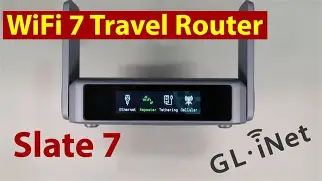
The GL.iNet Slate 7 represents a specific era of portable networking where balance was the primary design philosophy. It occupies the middle ground between the ultra-compact, basic Nano routers and the more recent, larger Wi-Fi 6 variants like the Slate AX. Despite the emergence of newer standards, the Slate 7 remains a staple because of its reliability, dual-band AC750 speeds, and, most importantly, its matured software ecosystem. When analyzing the device, it is clear that its value isn’t derived solely from its hardware specifications—dual-band 2.4GHz and 5GHz Wi-Fi, three Gigabit Ethernet ports, and a MicroSD slot—but from the software flexibility provided by its custom OpenWrt-based firmware.
Most buyers care about three things: portability, ease of use, and security. The Slate 7 excels in portability with its foldable antennas and compact footprint. Ease of use is managed through the GL.iNet proprietary web interface, which simplifies complex Linux-based networking commands into toggle switches. However, it is in the realm of security where the hidden features truly lie. By leveraging the underlying Linux architecture, users can implement advanced routing protocols that protect data even when connected to untrusted public hotspots in airports or cafes. The device effectively acts as a managed firewall that sits between the public internet and your private devices, ensuring that your laptops, tablets, and phones are never directly exposed to the local network of a hotel or Airbnb.
1. Advanced DNS Encryption via Cloudflare and NextDNS
One of the most overlooked vulnerabilities in public networking is the Domain Name System (DNS). Even if you are using an encrypted website (HTTPS), your DNS queries—the requests your router sends to translate a URL like "google.com" into an IP address—are typically sent in plain text. This means a hotel Wi-Fi administrator or a malicious actor on the same network can see every website you intend to visit. The GL.iNet Slate 7 has a hidden gem in its "DNS Settings" menu: native support for DNS over TLS (DoT).
This feature allows the router to encrypt your DNS requests through providers like Cloudflare (1.1.1.1) or NextDNS. Unlike standard routers that require complex command-line configurations to enable this, the Slate 7 integrates it into the UI. By enabling DoT, you ensure that your browsing habits remain private from the local network provider. This is particularly useful for travelers in regions where DNS hijacking is common, or where local ISPs may redirect traffic to censored or malicious versions of popular websites. It adds a layer of "invisible" security that functions regardless of whether your individual devices have security software installed.
2. The Physical Programmable Toggle Switch
On the side of the Slate 7 sits a small physical sliding switch. In its default state, this switch often does nothing, leading many users to ignore it. However, the firmware allows this switch to be mapped to specific, high-value functions that are incredibly useful in the field. Within the "Button Settings" section of the interface, users can program the switch to act as a physical kill-switch for various services.
The most powerful use case for this switch is for OpenVPN or WireGuard toggling. Imagine you are working in a coffee shop and need to quickly jump on a video call where high latency might be an issue, but you want to revert to a secure VPN immediately afterward. Instead of logging into the router’s web interface on your phone or laptop, you can simply slide the physical switch to initiate or terminate the VPN tunnel. Other options include toggling the Wi-Fi radio or turning on a guest network. This physical interaction provides a level of tactical control that is rare in consumer-grade electronics, allowing for a "blind" operation of the router while it is tucked away in a backpack or under a desk.
3. MicroSD File Sharing and Media Server Integration
The Slate 7 features a MicroSD card slot that supports layouts up to 128GB (and often more with specific formatting). While many see this as a way to expand the router’s internal storage for installing OpenWrt packages, its true power lies in its ability to act as a Network Attached Storage (NAS) and DLNA media server. In the "File Sharing" settings, users can enable Samba (SMB) or DLNA protocols.
Discover deals on Electronics — updated daily.
See Deals →This is a game-changer for long-haul travel or family trips. Instead of filling up the limited storage on every family member’s tablet with movies and shows, you can load a single MicroSD card with media and insert it into the Slate. The router then broadcasts those files to every connected device. Because the Slate has Gigabit Ethernet ports, it can also be used as a central hub for photographers or videographers to quickly backup files from a laptop to a portable drive connected to the USB 2.0 port, while simultaneously sharing those files with a client’s device on the local network. It effectively turns a 100-gram router into a portable data center.
4. Multi-WAN Failover and Load Balancing
For professionals who cannot afford a single minute of downtime—such as day traders, engineers on call, or remote presenters—the Slate 7 offers "Multi-WAN" capabilities. This feature is usually found only in expensive dual-WAN enterprise routers. The Slate 7 can handle internet input from three sources simultaneously: the Ethernet WAN port, a 4G USB modem (or phone tethering), and a Repeater connection (public Wi-Fi).
Hidden within the "Internet" settings is the ability to prioritize these connections. If you have a cellular hotspot plugged into the USB port and the hotel Wi-Fi goes down, the Slate can be configured to automatically failover to the cellular data within seconds. This happens at the router level, meaning your laptop doesn't even realize the primary connection was lost; it simply continues to receive data through the Slate. Furthermore, for advanced users who access the LuCI interface (the advanced OpenWrt backend), you can set up load balancing to distribute traffic across both the hotel Wi-Fi and your cellular data, effectively increasing your total available bandwidth in areas with slow connections.
5. Tailscale and ZeroTier Integration
The latest firmware updates for the Slate 7 have brought support for "SD-WAN" technologies like Tailscale and ZeroTier through the plug-in architecture. While standard VPNs like WireGuard are great for connecting to a specific server, Tailscale and ZeroTier allow you to create a "flat" virtual network between all your devices, regardless of where they are in the world.
By installing the Tailscale package on your Slate 7, you can access your home NAS or office workstation as if it were plugged directly into the router in your hotel room. This bypasses the need for complex port forwarding or DDNS setups. It is particularly valuable for those who need to access local resources at home while traveling abroad. Since the Slate handles the encryption and the handshake, your devices connected to the Slate’s Wi-Fi don't need to run individual VPN clients. This "Transparent Proxy" mode is a massive hidden advantage for maintaining a seamless workflow across continents, making your remote office feel exactly like your home office.
Pros and Cons of the Slate 7
- Pros: Powerful OpenWrt-based firmware allows for extreme customization and the installation of thousands of additional packages.
- Pros: Triple Gigabit Ethernet ports provide high-speed wired connectivity for laptops and consoles, which is rare in travel routers.
- Pros: Dual-band Wi-Fi (AC750) effectively minimizes interference in crowded hotel environments by utilizing the 5GHz spectrum.
- Pros: Native WireGuard support offers significantly faster VPN speeds compared to older routers limited to OpenVPN.
- Pros: Compact, foldable design with a standard Micro-USB power input makes it easy to power from a laptop or a portable power bank.
- Cons: The USB 2.0 port is slower than modern USB 3.0 standards, limiting the transfer speeds of connected hard drives.
- Cons: As an older model, it lacks Wi-Fi 6 (802.11ax) support, which may be a drawback for those with the latest high-end smartphones and laptops.
- Cons: The device can run quite warm when handling high-speed VPN encryption and multiple connected clients simultaneously.
Technical Comparison: Slate 7 vs. Competitors
| Feature | GL.iNet Slate (AR750S) | TP-Link N300 Travel | GL.iNet Beryl (MT1300) |
|---|---|---|---|
| Wi-Fi Speed | AC750 (Dual Band) | N300 (Single Band) | AC1300 (Dual Band) |
| Ethernet Ports | 3 x Gigabit | 1 x 10/100 Mbps | 3 x Gigabit |
| Firmware | OpenWrt (Full Access) | Proprietary (Limited) | OpenWrt (Full Access) |
| VPN Support | WireGuard & OpenVPN | None | WireGuard & OpenVPN |
| Storage Expandability | MicroSD & USB | None | MicroSD & USB |
A Comprehensive Buying Guide for Portable Routers
When selecting a portable router, it is easy to get distracted by maximum theoretical speeds. However, for most travelers, the real bottlenecks are the hotel’s internet source and the router’s ability to process encryption. Here is what you should consider before making a decision.
Processing Power for VPNs
If you plan to use a VPN—which is highly recommended for any public connection—look at the processor specs. The Slate 7 uses a Qualcomm QCA9563 SoC, which is capable of handling WireGuard at respectable speeds (up to 50Mbps). If your home internet is 500Mbps, you won't get those speeds through a travel router VPN, but 50Mbps is more than enough for 4K streaming and video conferencing. Avoid cheaper routers that don't specify VPN throughput, as they often crawl at 5-10Mbps when encryption is enabled.
Discover deals on Electronics — updated daily.
View Offers →Portability vs. Performance
There is always a trade-off between size and cooling. Ultra-small routers often lack Ethernet ports and overheat quickly. The Slate 7 hits the "Goldilocks" zone: it is small enough to fit in a jacket pocket but large enough to include heat syncs and three physical ports. If you frequently stay in hotels that provide an Ethernet jack in the room, a router with Gigabit ports like the Slate is essential, as a wired backhaul will always be more stable than repeating a weak Wi-Fi signal.
The Power Supply Factor
One of the best features of the Slate 7 is its 5V/2A power requirement via Micro-USB. Some newer, more powerful routers require proprietary DC barrel jacks or high-wattage USB-C Power Delivery. A router that can run off a standard phone charger or a power bank is infinitely more versatile. This allows you to keep the router running inside your backpack while you move between locations, maintaining a consistent "personal bubble" of Wi-Fi for your devices.
Software Longevity
Hardware eventually becomes obsolete, but software flexibility can extend a device's life by years. Because the Slate 7 is built on OpenWrt, it receives community updates and security patches long after the manufacturer might stop supporting a proprietary model. If you are a power user who likes to "set it and forget it," the ability to script automated tasks or install specific network monitoring tools makes the Slate 7 a much better long-term investment than a "locked" consumer router.
The Real-World Use Case: Why Travelers Care
Consider the typical "captive portal" experience at a hotel. You have to log in with your room number and last name, but you can only do this on two devices. With the Slate 7, you log the router into the hotel Wi-Fi once. The router then presents a single, consistent Wi-Fi network (SSID) to all your devices—your laptop, phone, tablet, Kindle, and smartwatch. To the hotel, it looks like only one device is connected. This saves time, avoids per-device fees, and ensures that all your internal traffic (like printing from your laptop to a portable wireless printer) stays private and encrypted.
Furthermore, the ability to bypass restrictive firewalls in certain countries or corporate environments cannot be overstated. By using the hidden WireGuard features and custom DNS settings, the Slate 7 can masquerade its traffic, allowing you to access your necessary work tools and social media regardless of local restrictions. It provides a level of digital autonomy that is vital in today's interconnected yet often restricted world.
Conclusion
The GL.iNet Slate 7 Portable Router is a rare example of a gadget that offers more than it promises on the box. While many see it as a simple travel accessory, its deep integration with OpenWrt and its thoughtful hardware inclusions—like the physical toggle switch and MicroSD slot—make it a sophisticated networking tool. By mastering features like DNS encryption, physical kill-switches, and Multi-WAN failover, you can create a secure, high-speed, and resilient internet connection wherever you go. Whether you are a digital nomad working from a beach in Bali or a business traveler moving through airport lounges, the Slate 7 provides the security and flexibility needed to stay productive in an unpredictable digital environment. Understanding these hidden features doesn't just make the device more useful; it transforms the way you interact with the internet on the move.